Race to Zero

Advances in technology continue to transform how our financial markets operate. The volume of financial products traded through computer automated trading taking place at high speed and with little human involvement has increased dramatically in the past few years. For example, today, over one third of UK equity trading volume is generated through high frequency automated computer trading while in the US this figure is closer to three-quarters.

Unfortunately, there is a downside.

[…] one strange and disturbing episode that lasted a mere 20 minutes on the afternoon of 6 May 2010, beginning around 2.40 p.m. The overall prices of US shares, and of the index futures contracts that are bets on those prices, fell by about 6 per cent in around five minutes, a fall of almost unprecedented rapidity (it’s typical for broad market indices to change by a maximum of between 1 and 2 per cent in an entire day). Overall prices then recovered almost as quickly, but gigantic price fluctuations took place in some individual shares. Shares in the global consultancy Accenture, for example, had been trading at around $40.50, but dropped to a single cent. Sotheby’s, which had been trading at around $34, suddenly jumped to $99,999.99. The market was already nervous that day because of the Eurozone debt crisis (in particular the dire situation of Greece), but no ‘new news’ arrived during the critical 20 minutes that could account for the huge sudden drop and recovery, and nothing had been learned about Accenture to explain its shares losing almost all their value.

Donald MacKenzie – How to Make Money in Microseconds

On that day, the US equity market dropped by 600 points in 5 minutes, eliminating approximately US$800bn of value, and then regained almost all of the losses within 30 minutes. Wow.

After five months of investigation it was found that this “flash crash” was triggered by an algorithm used in an automated trading programme. Fortunately the electronic platform on which these trades were executed had a “stop logic” functionality designed to detect and interrupt such self-feeding crashes by giving human traders time to assess what was happening, step in and pick up bargains.

Algorithmic trading, including high frequency trading (HFT), is rapidly replacing human decision making, according to a UK government panel which warned that the right regulations need to be introduced to protect stock markets. The Government  Department for Business, Innovation and Skills (BIS) has released a very good paper documenting this phenomenon. If you want a deeper view on this subject, it is definitely worth to give it a look: The Future of Computer Trading in Financial Markets | Working paper (pdf file)

The impact of technology developments

On the tech side, the impact is huge as well.  Automated trading involves a bunch of time-critical aspects. Moreover, future trading machines will be able to adapt and learn with little human involvement in their design. There is a compelling article on HPCWire addressing this issues and, again, my advice would be to go through it.

Rumble!

Mobile Patent Suits (again?)

Dilbert.com

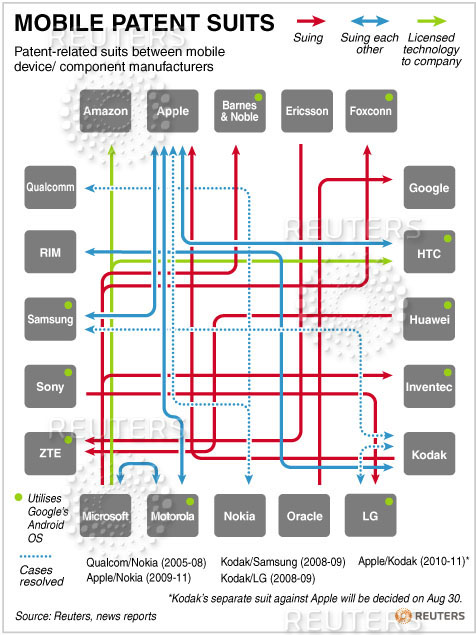
Who’s suing who? Perhaps this chart (courtesy of Reuters) will help make sense of the whole mess. Or maybe not. It looks like a giant spaghetti bowl.

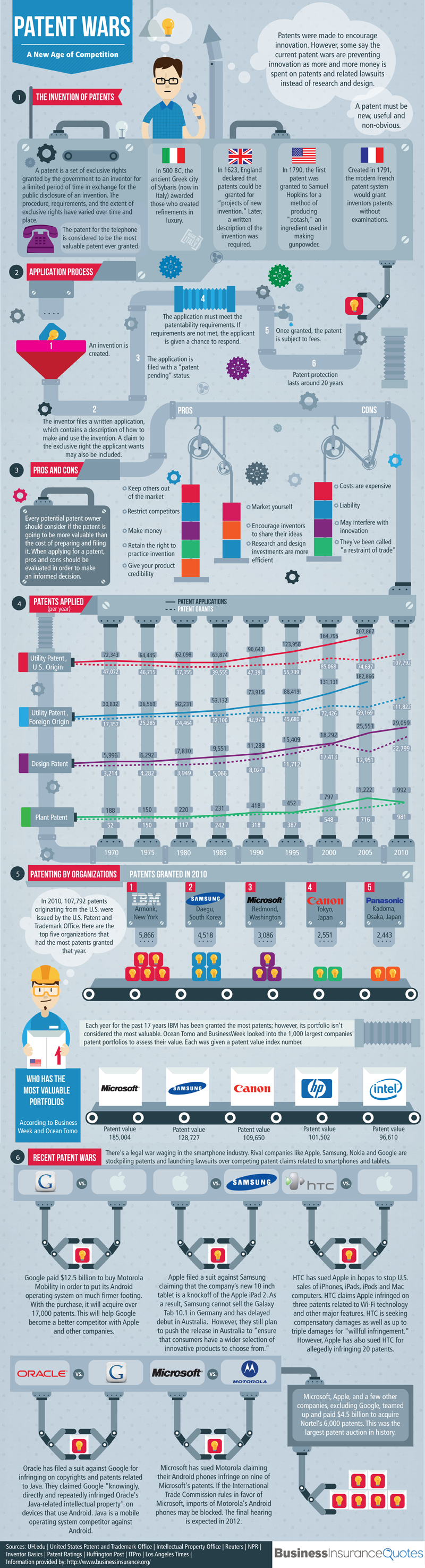
Mobile Patent Suits ChartIf you don’t know what I am talking about, take a look at this gorgeous infographic on Business Insurance Quotes:

Courtesy of BusinessInsurance.org

Courtesy of BusinessInsurance.org

Think Different

Apple will not wait to see what the market wants

The announcement that Steve Jobs is to resign as Apple’s CEO should come as no surprise.

There is no doubt the influence of Jobs has been hugely important in making Apple the company it is today.

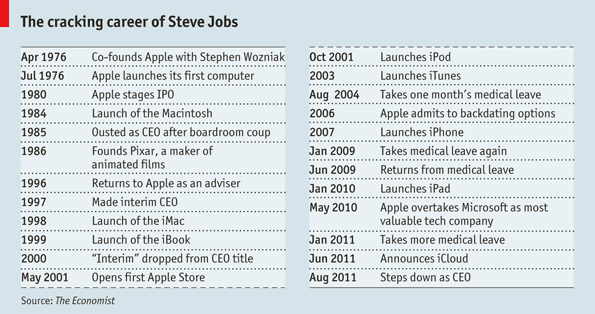
Steve Jobs career (source: The Economist)

However, IMHO will continue its onward march, not least because the market has been well aware of Jobs’ health issues and there is certainly no ‘Jobs premium’ built into Apple’s valuation.

It is not by chance that Apple is the success it is. This is a company that:

  1. has a strategy well in place for the mid-term
  2. is dominant in the tablet market – a market that has barely considered adolescence let alone maturity
  3. is leader in the smart phone market
  4. though it still only has single figure market share in the PC market, IMHO will continue to take share.

This company does not wait to see what the market wants – it creates what the market did not know it wanted but when it has it, it wants more. It will continue so to do.
It also have a strong competitive position: Apple has developed some quite unique barriers to entry through the iTunes store and the AppStore – which has the effect of creating much ‘stickier’ customers. Additionally, through being vertically integrated they can now not only produce the best product but can do so at the best prices – their competitors are desperately struggling to match the iPad price without making losses.

For sure, Apple will not be better without Steve Jobs but I hope that he has injected enough of his DNA into the company to let her continue this success story without him.

All the best to Tim Cook, new CEO, who has already proved himself extremely capable.

Other interesting articles on the same subject:

Freakonomics: Was Steve Jobs’ Retirement Already Priced into Apple Stock?

The Economist: Steve Jobs resigns. The minister of magic steps down

Big Bubbles

Big Bubbles, No Troubles

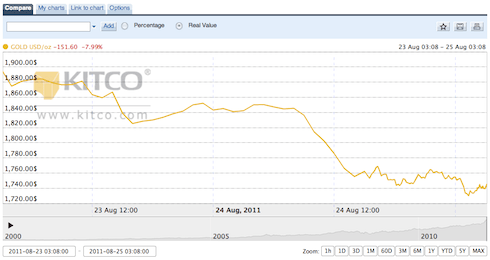
Nouriel RoubiniNouriel Roubini AKA Dr. Doom did it again. His tweet released on August 23 where he compares gold values to Y2K tech bubble has quickly sparkled reactions among analysts and other pundits.

Among them, the strongest critic comes (no suprise!) from Adrian Ash of  BullionVault, the world’s No.1 gold ownership and trading service:

[Roubini says that] Gold is a dumb thing to buy. Because it’s a bubble, plain and simple and always.

“Since gold has no intrinsic value,” says Dr.Doom, “there are significant risks of a downward correction.

Oh sorry – that was him way back in December 2009, not here in August 2011. Gold Prices have very nearly doubled since then, despite having no value to New York University economists. But no matter. It’s what happens next that counts.

Uh-oh! Then Ash puts in evidence what I think is really is a macroscopic error by Roubini. In his tweet he had linked a chart comparing gold in tha last ten years vs. Nasdaq in the 90s, asserting that there is nothing new under the sun: gold is in a big bubble just like tech stocks 10 years ago.

Gold vs Nasdaq - Roubini

What Ash notes is quite obviuos:

This chart is more than simply “time-adjusted” (as he claims) in mapping the “gold bubble” onto the “Nasdaq bubble”.

Note, for instance, that its vertical axes show nominal prices (Dollars per ounce for gold, index value for the tech-stock Nasdaq). That overplays gold’s relative gains, now running at 6-fold since the chart’s starting point. The Nasdaq, at its top of only a few months earlier, you’ll recall, towered more than 10 times higher from a decade before.

That said, in my very humble opinion, gold is due for a correction. It would be a non-event to see a sudden drop in gold. This would actually be a healthy development for markets by shaking out the short-term speculators while the long-term story remains on solid ground.

Frank Holmes, contributor of seekingalpha, is on the same path. He has written a very good article on The Neverending Story of a Gold Bubble, indicating many fundamental reasons that could pop the “gold bubble” talk without using complicated charts or angry words: if you are interested in this subject you should definitely take a look at it.

Original articles:

Adrian Ash – If Gold Were the Nasdaq
Frank Holmes – The Neverendig Story of a ‘Gold Bubble’