
Googlerola: my 2+1 cents [Infographic]
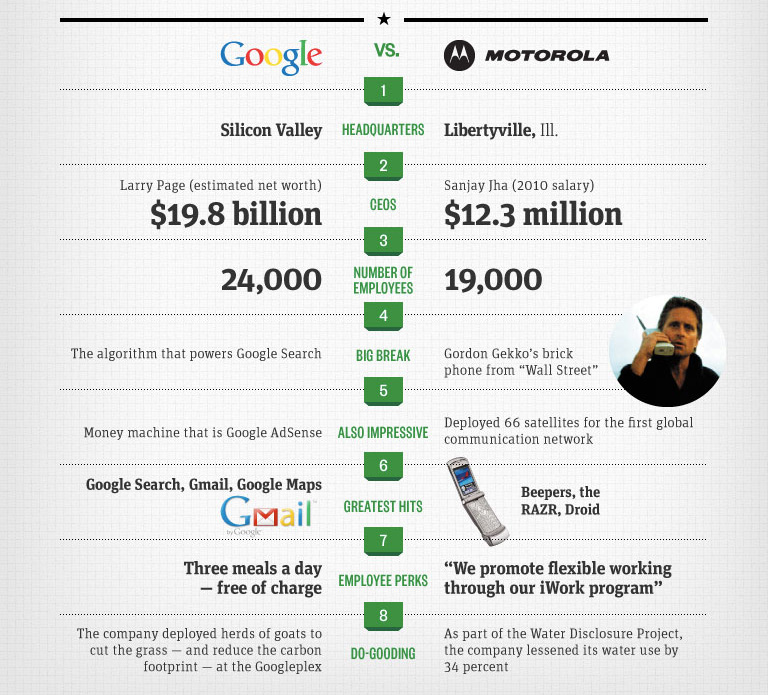
In these last days, I have tried to figure out what the outcomes of the Googlerola affair could be. There are at least four aspects to be considered:
There are already tons of different opinions on the still-to-be-approved acquisition, including ferocious critics (read Henry Blodget foreseeing a “colossal disaster”).
I decided to stick to what Steven Levy says about it. Despite his closeness to Google (Did you read “In the Plex“? You should!), the decision to buy Motorola seems to have caught Levy by surprise.
Just a couple of hours after the Larry Page’s announcement, Levy had a quite long conversation with Business Insider. There is the link to that article at the bottom of this post, but I’d like to highlight a few words from Levy:
On price:
I wouldn’t have predicted that Google would have bought Motorola but it’s not surprising because Google likes to take big bets and make big leaps.
On timing:
Certainly it’s characteristic of Larry. If he has a situation to deal with, he’ll come up with the biggest possible response because big responses and big risks is part of his makeup.
On people:
Why wouldn’t Google want to make the workforce of its new company reflect its own values which would mean getting rid of some people and bringing on other people. Larry Page vets every single employee hired at Google, do you think he’s going to take on 19,000 employees and not care about how they perform or how well they meet his standards?
On Open Handset Alliance:
Google’s invested in the Android system and it has to make sure its partners feel secure in adopting that system. I don’t know if it’s total indemnification, or if it’s just help. To me, the one thing that makes this thing go down palatably to places like Samsung and HTC, is that they’re going to benefit by Google having this patent portfolio, this protection.
Read the full article on BusinessInsider.
MMQ6UHNZYGT4
 Social web is based on disintermediation: this is why lawyer firms has always tried to stay away from it (intermediation is their job).
At least in the US, something could change. Google Ventures has announced it is part of a group that infused $18.5 million into Rocket Lawyer, which bills itself as the “fastest growing online legal service”.
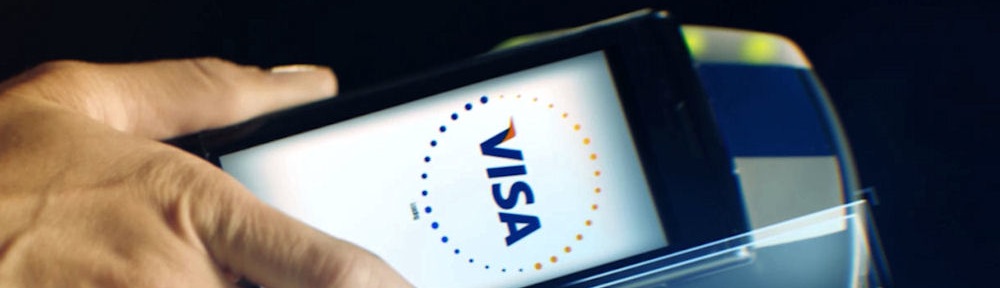
 Near field communication (NFC) has allowed users in Asia and especially Japan to replace credit cards with phones — yet the technology has languished everywhere else, in spite of Google’s best efforts to provide a “digital wallet” that allows users to pay for things simply by touching their phone to a pad.
PalmSecure, a superior competing technology from Fujitsu has now emerged. It’s a contactless biometric system that does not require the user to have their own hardware. Near-infrared light shines up from a detector, allowing it to image the unique pattern of veins in a person’s hand. This pattern is stored as a unique identifier, not an image.
Source and original article: Technology Review


In a recent report, Nielsen has stated that in U.S. Smartphone Market, Android is Top Operating System, Apple is Top Manufacturer.

We all know that Google has a business model for Android that goes far beyond the “simple” device sales figures (read something about it here, and listen to what Schmidt has to say on this subject). But are we sure that the people in MV aren’t missing something?
Apple captured two thirds of available mobile phone profits in Q2. Take a moment to let that sink in. Apple now controls over 66 percent of all the profits amongst the major players in the mobile space. HTC, RIM, LG, Sony-Ericsson, Samsung Motorola, and Nokia combined for the other 33 or so percent of profits in the space (with a few of them: Nokia, Motorola, LG, and Sony actually losing money).

It seems that smartphone roaring sales are crushing Nokia Chief executive Stephen Elop’s transition plan. The lack of news on the upcoming (?) Nokia-Windows phone and the shift towards hi-end products (i.e. Apple Iphone and Samsung Android-equipped devices) coming from emerging countries have lead in Q2 2011 to a $692 million loss, the second in the history of the Finnish company.
Read more about it in this interesting article on ViewsWire.
 Simone Calamai