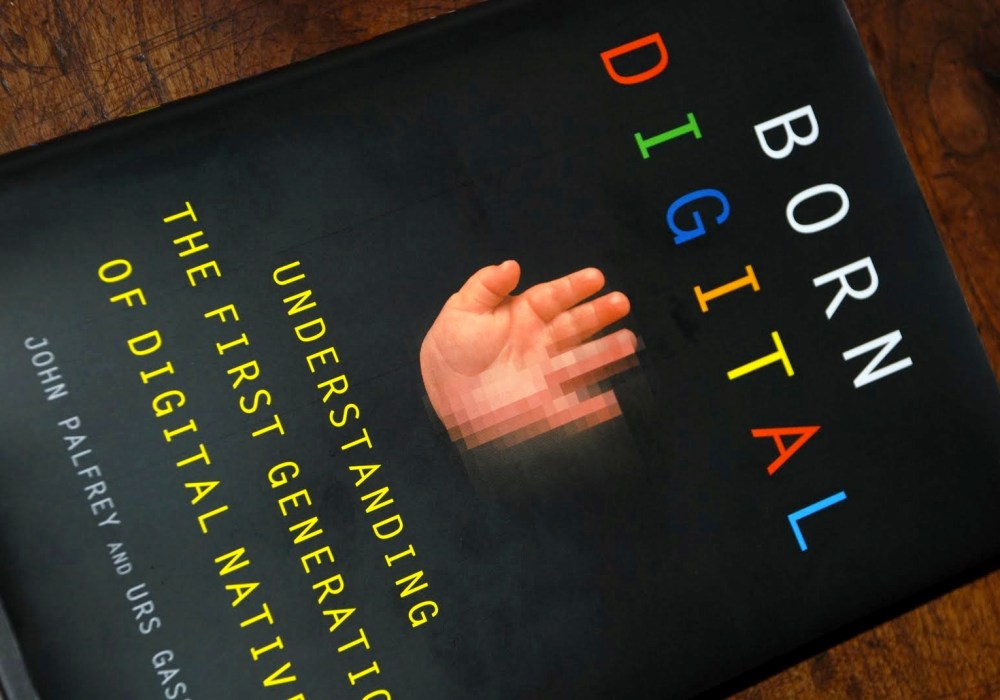
Digital Natives
Pietro, 4 years old.

Pietro, 4 years old.

Everybody ought to have a Lower East Side in their life — Irving Berlin
 Save the date! Held in New York this year for the first time ever, the Rugby Ralph Lauren Tweed Run is a one-of-a-kind cycling event that combines our love of classic tweed style, British cultural heritage and a good, old-fashioned bike ride with friends. On October 15 we’ll be dusting off our vintage velocipedes and winding through lower Manhattan — breaking along the way for tea, of course — before finishing the ride with a gin-swilling party in Brooklyn. We’ll be outfitted for the occasion in traditional British cycling attire, particularly tweed blazers, kickerbockers and riding caps.
Start polishing your Brooks saddles and check out the official event site!

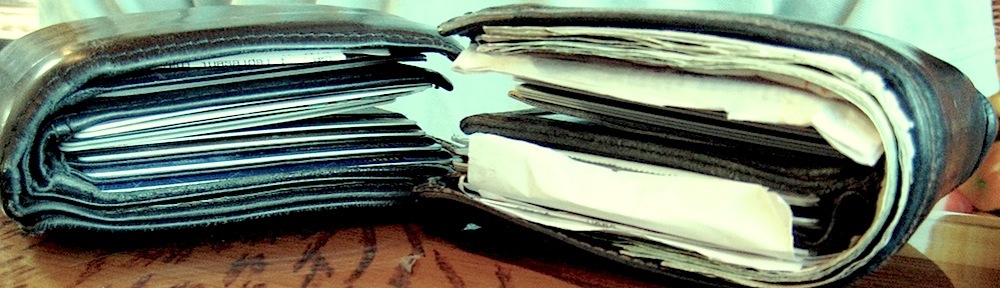
Google has finally launched the Wallet app, although service seems a more appropriate definition. You can pay and save using your mobile phone and near field communication (NFC). The first version of the app is released to Sprint only. That means Google is deploying Wallet to all Sprint Nexus S 4G phones through an over-the-air update.
Matt Buchanan of Gizmodo has already given the service a try. Although it does not look so seamless as “tap’n’pay”, it could really be revolutionary.
As Google states:
Our goal is to make it possible for you to add all of your payment cards to Google Wallet, so you can say goodbye to even the biggest traditional wallets.
Think about all the countries where the usage of plastic money is not so popular, resulting with huge problems of transactions’ traceability. It is an established fact that countries with more electronic transactions have smaller shadow economies and, consequently, lower tax evasion rates. This is one of the key factors behind the current sovereign debt crisis affecting quite a bunch of european developed countries where, in a typical vicious circle scheme, more and more people are inclined to work outside the normal, legal framework as their country’s economy continues to struggle.

Shadow economy as % of GDP, European countries, 2010
From the consumer perspective, the most common excuse for not using debit/credit cards when making little payments is that it is not convenient or fast enough. Besides the fact that today it is more likely to forget at home the wallet rather than your mobile, paying with the smartphone introduces the speed factor in the transaction and, above all, it’s cool (i.e. fashionable = network effect).
Don’t get me wrong. I am not saying that NFC will solve the Eurozone crisis: I am a nerd but not that much 😎 From that point of view it is going to be just a drop in the bucket, but it surely is a step in the right direction.
In any case, we have some time to think about it: Google Wallet currently works only in the US on Nexus S 4G devices of the Sprint network. In the meantime, check out the official Google Wallet launch video.


After reading and writing tons of emails, tweets, articles about the financial (and economic) perfect storm that is hitting Europe and the US, I decided to take a break and concentrate myself for a while on some more basic issues 😎
For example, it looks like I have the same problem as The Sartorialist: which way to go when it comes to hemming your pants for the next AW season? Scott shows three options:
 |
 |
 |
| Slim, and right at the ankle, no break | Slim, past the ankle, with lots of break | Above the ankle, with an extra wide cuff |
I strongly prefer the first one, maybe with a touch of italian style (just add a 1.8″ cuff).
What do you think about it?

Remember one of the most retweeted chart of 2010? It was ripped off the Morgan Stanley’s Internet Trends presentation, and showed how social networking messaging systems have already surpassed email usage:
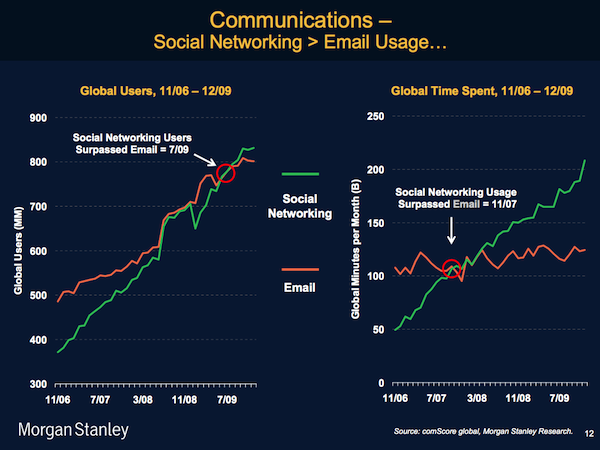
Whether it’s Twitter, Facebook, or some other social networking service, I believe the lighter weight communication paradigm (say less, reach more) is superior to email for many things. Nonetheless, email’s usage is still growing and IMHO is more suitable for long-form serious private conversations.
You may think that this trend is affecting only the way we send and receive messages on the web. What about the old, tangible, bunch of papers we find in our real mailbox? The Economist has a nice article depicting the volume of mail handled by the US Postal Office:

As ever more Americans go online instead of sending paper, the volume of mail has been plummeting […] Delivery costs are simultaneously going up. As a result, the post has lost $20 billion in the last four years and expects to lose another $8 billion this fiscal year […] As Christmas cards have gone online (and “green”), so have bills. In 2000, 5% of Americans paid utilities online. Last year 55% did.
USPS is planning to close post offices; up to 3,653, out of about 32,000. This month it announced plans to lay off another 120,000 workers by 2015, having already bidden adieu to some 110,000 over the past four years (for a total of about 560,000 now). It also wants to fiddle with its workers’ pensions and health care.
The post will have to stop delivering mail on Saturdays. Then perhaps on other days too.
USPS was born “to bind the Nation together”. Now it looks like there is a substitute: Internet.

 Simone Calamai