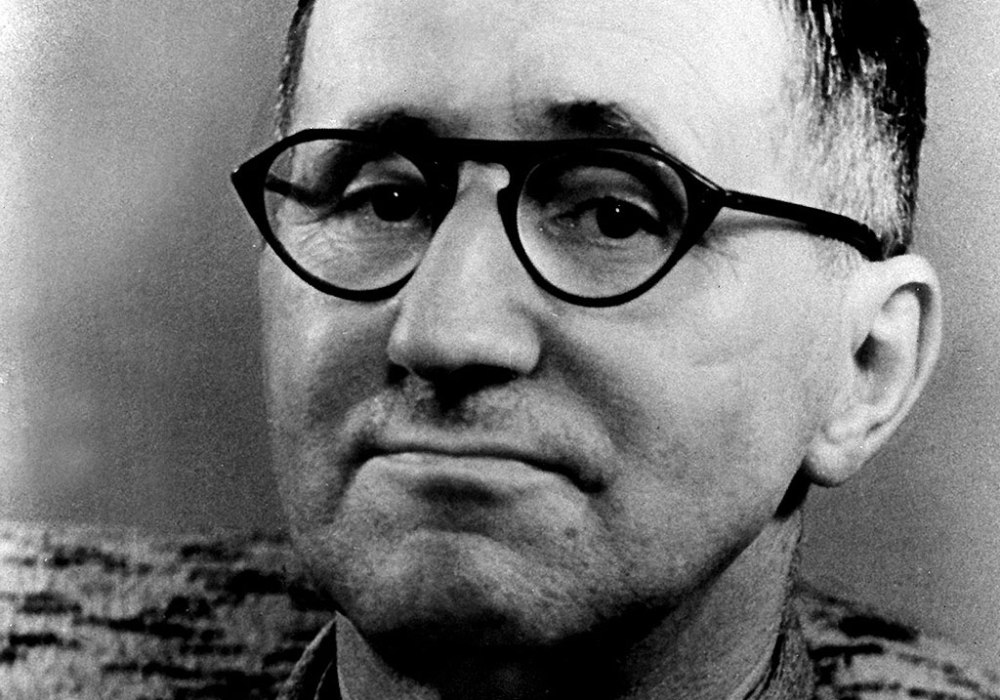
Pleasures

First look from morning’s window
The rediscovered book
Fascinated faces
Snow, the change of the seasons
The newspaper
The dog
Dialectics
Showering, swimming
Old music
Comfortable shoes
Comprehension
New music
Writing, planting
Traveling
Singing
Being friendly

(Bertolt Brecht)

Toilet 2.0

No joke: Bill Gates wants to reinvent the toilet.

Gates is focusing on the need for a new type of toilet as an important part of his foundation‘s push to improve health in the developing world. Open defecation leads to sanitation problems that cause 1.5 million children under 5 to die each year, Gates said, and Western-syle toilets are not the answer as they demand a complex sewer infrastructure and use too much water. As a matter of fact, toilet technology has not fundamentally changed since the invention of the flush toilet in 1775.

One year ago, the foundation issued a challenge to universities to design toilets that can capture and process human waste without piped water, sewer or electrical connections, and transform human waste into useful resources, such as energy and water, at an affordable price. California Institute of Technology in the United States received the $100,000 first prize for designing a solar-powered toilet that generates hydrogen and electricity.

In addition to health issues and equal opportunities, this represents a huge potential market for business. As reported in an interesting article on the Harvard Business Review by Alfredo Behrens:

The largest markets will be seen around the axis of India and China, because both countries have huge populations, with a significant share still living in rural areas. India, for instance, expects to see some 350-400 million people becoming urban residents in the next three decades. That could mean demand for as many as 150 million new toilets.

Beherns estimates that in 2010, the two world’s largest toilet suppliers have shipped about 6 million units to emerging markets where, altogether, there are about 2.8 billion people without access to sanitarily acceptable toilet systems.

It looks pretty clear that demand and supply gap is daunting. Moreover, additional demand for new toilets, and derived demand for raw materials and energy, is only the tip of the housing demand iceberg coming from emerging markets. This will far outstrip the current demand coming from the advanced economies.

Globalization, anyone?
Gore Vidal

System Error

The genius of our ruling class is that it has kept a majority of the people from ever questioning the inequity of a system where most people drudge along, paying heavy taxes for which they get nothing in return.

— Gore Vidal

Savings

An Efficient Financial System

Indian charity Butterflies are giving street children a new start in life through education and banking.

A bunch of Indian street kids set up a model bank with tens of branches all over South-East Asia.

In order to save money for a brighter future, they have created their own bank, where they can deposit their money and take advances whenever they need to. A branch of this unusual financial institution is located in a shelter for homeless runaway teens in New Delhi. It’s here that street children who work come to place their money for safekeeping, and take out development or welfare advances to start a business or invest in things they need for school. The most impressive thing about this bank for kids and teens is that it was initiated, implemented and is operated by children. In fact, Satish Kumar, who was elected bank manager for the New Delhi branch of the children’s development ’khazana’ (Indian for ‘treasure chest’) doesn’t look a day over 12.

In a time when the global financial system seems more vulnerable than ever, it looks like a bunch of kids have everything figured out. During monthly meetings they review applications for advances, and based on everyone’s track record of saving and earning, they decide who can get the money and how quickly they have to pay it back. They hold everyone from the account managers to the clients responsible for their financial decisions.

Original article: RT.com

The new mayor? A Computer.

Your Next Mayor? A Computer.

Our planet is becoming smarter, and this isn’t just a metaphor.

Three years ago, 100 Parisians volunteered to wear a wristband with a sensor in it. The sensors measured air and noise pollution as the wearers made their way around the city, transmitting that data back to an online platform that created a virtual map of the city’s pollution levels, which anyone with an Internet connection could take a look at.

This was a peek at an urban future when “smart cities” will collect data of all kinds (in all kinds of ways) and use it to make themselves better places to live. With the market projected to be worth $16 billion by the end of the decade, big companies like IBM and Cisco have much grander — and more profitable — ambitions: they’re going all-in on smart cities, with designs that supposedly do everything from end traffic jams to prevent disease outbreaks to eliminate litter.

As IBM Chairman Samuel J. Palmisano said at the 2010 SmarterCities forum in Shanghai:

Computational power is being put into things we wouldn’t recognize as computers. Indeed, almost anything—any person, any object, any process or any service, for any organization, large or small—can become digitally aware and networked.

Think about the prospect of a trillion connected and instrumented things—cars, appliances, cameras, roadways, pipelines… even pharmaceuticals and livestock.

And then think about the amount of information produced by the interaction of all those things. It will be unprecedented.