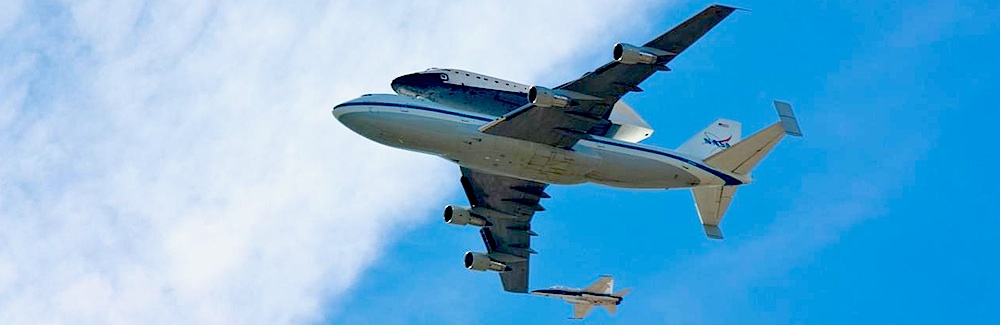
Space Shuttle Endeavour’s Final Journey
Beautiful. No cheesy music: just a camera, a pair of NASA F-18s, the NASA’s 747 Shuttle Carrier Aircraft and the orbiter Endeavor. Go full-screen HD!
Beautiful. No cheesy music: just a camera, a pair of NASA F-18s, the NASA’s 747 Shuttle Carrier Aircraft and the orbiter Endeavor. Go full-screen HD!

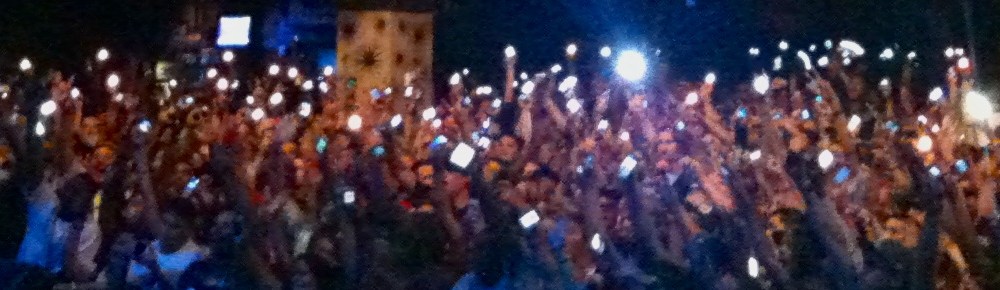
This summer I was lucky enough to attend some amazing Bruce Springsteen concerts. In Milan, the San Siro arena was packed. No less than 70,000 people waiting the whole day for Bruce and the E Street Band to come out on stage.
Then the lights went down. Almost immediately, thousands of hands went up, and not (only) to applaud. They were holding softly glowing screens. Cameras and smartphones, not necessarily in this order, all straining to capture the show.
Although I’ll be the first to admit that I’m a social media addicted, I tend to limit myself to a snap or two at the beginning or end of a performance, trying to keep my focus on the show and not be distracted by Twitter, Facebook or Instagram.
At this show, however, I noticed something different. With the notable exception of someone for whom, apparently, gig recording is a second job, people appeared to be trying to carve in digital form not the show itself, but the mood of the most memorable moments of the show.
Suddenly, I realized that instead of trying to obsessively document the night, Bruce’s fans were interested in capturing small snippets of the show to serve as a placebo in the future. The videos could augment that physical recollection of the night, rather than serve as a replacement for it.
This could be a sign that we are now in a sort of “memories overdose”: because of digital data and networks, we are in a situation where the amount of memories we can reasonably review has exceeded our capacity. Just take a look at YouTube statistics to see what I mean.
BTW, this is a pic taken in Milan from inside the pit. What a show… 😉


Albert Einstein once said that
Technological progress is like an axe in the hands of a pathological criminal.
Or not? The U.S. Air Force has released an impressive video on accelerating change, “Welcome to 2035…the Age of Surprise” (see below).
Produced by the U.S. Air Force Center for Strategy and Technology at The Air University, the video was based on Blue Horizons, a multi-year future study being conducted for the Air Force Chief of Staff, a “meta-strategy for the age of surprise”…
We can predict broad outlines, but we don’t know the ramifications. Information travels everywhere; anyone can access everything — the collective intelligence of humanity drives innovation in every direction while enabling new threats from super-empowered individuals with new domains, interconnecting faster than ever before. Unlimited combinations create unforeseen consequences.
Maybe it is just PR and nothing more, or another article about predicting history today, but the video is definitely cool. Turn up your sound, and go HD full-screen!
First look from morning’s window
The rediscovered book
Fascinated faces
Snow, the change of the seasons
The newspaper
The dog
Dialectics
Showering, swimming
Old music
Comfortable shoes
Comprehension
New music
Writing, planting
Traveling
Singing
Being friendly
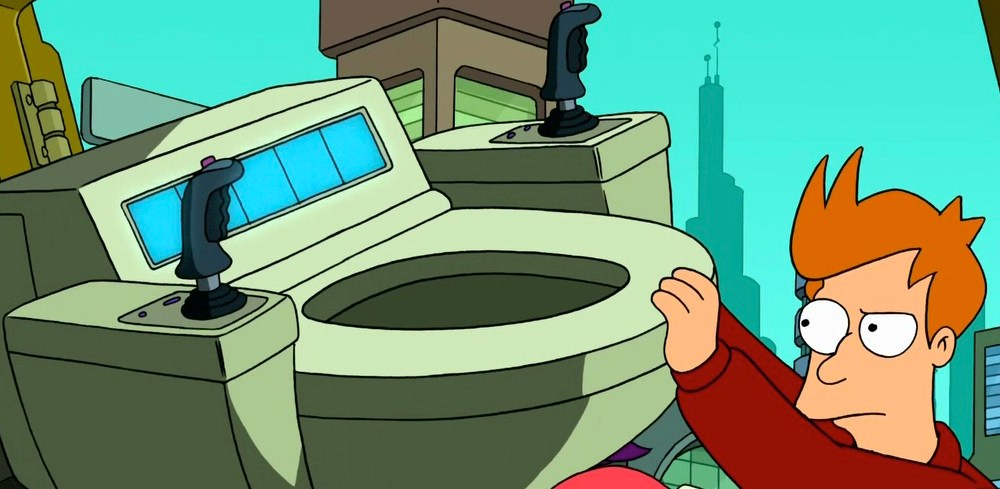
No joke: Bill Gates wants to reinvent the toilet.
Gates is focusing on the need for a new type of toilet as an important part of his foundation‘s push to improve health in the developing world. Open defecation leads to sanitation problems that cause 1.5 million children under 5 to die each year, Gates said, and Western-syle toilets are not the answer as they demand a complex sewer infrastructure and use too much water. As a matter of fact, toilet technology has not fundamentally changed since the invention of the flush toilet in 1775.
One year ago, the foundation issued a challenge to universities to design toilets that can capture and process human waste without piped water, sewer or electrical connections, and transform human waste into useful resources, such as energy and water, at an affordable price. California Institute of Technology in the United States received the $100,000 first prize for designing a solar-powered toilet that generates hydrogen and electricity.
In addition to health issues and equal opportunities, this represents a huge potential market for business. As reported in an interesting article on the Harvard Business Review by Alfredo Behrens:
The largest markets will be seen around the axis of India and China, because both countries have huge populations, with a significant share still living in rural areas. India, for instance, expects to see some 350-400 million people becoming urban residents in the next three decades. That could mean demand for as many as 150 million new toilets.
Beherns estimates that in 2010, the two world’s largest toilet suppliers have shipped about 6 million units to emerging markets where, altogether, there are about 2.8 billion people without access to sanitarily acceptable toilet systems.
It looks pretty clear that demand and supply gap is daunting. Moreover, additional demand for new toilets, and derived demand for raw materials and energy, is only the tip of the housing demand iceberg coming from emerging markets. This will far outstrip the current demand coming from the advanced economies.
Globalization, anyone?
 Simone Calamai